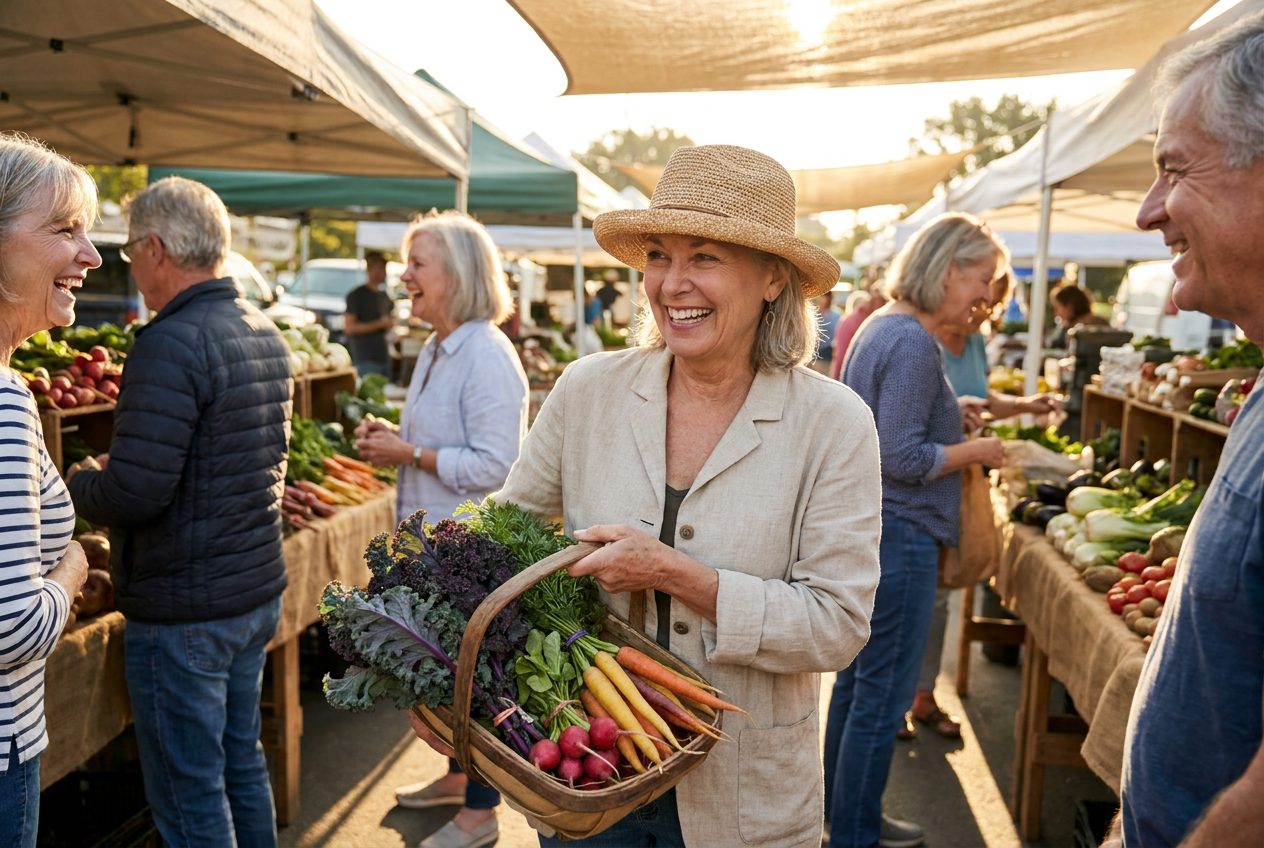
When we consider social health, we naturally prioritize family and close friends. However, modern research suggests that casual acquaintances play an equally vital role in how we age. A landmark study titled The Strength of Weak Ties, published in the American Journal of Sociology by Mark Granovetter of Johns Hopkins University, revolutionized our understanding of social networks. While Granovetter’s original 1973 research focused on information flow, subsequent long-term analysis of his cohort models indicates that individuals with a diverse range of weak ties report significantly higher levels of physical health and cognitive function. This highlights that the variety of social contacts is just as essential for longevity as the intensity of our deepest relationships.
Weak ties include the barista who knows your order or the neighbor you wave to daily. Granovetter’s research demonstrated that these low-stakes relationships provide unique social stimulation that deep bonds often lack. For those in their 50s and 60s, these interactions serve as a bridge to the wider world, preventing the social narrowing that occurs during retirement or as children leave home. These casual contacts force us to exercise different social muscles, requiring more presence and communication than interactions with a spouse who already knows our thoughts. This mental agility is a cornerstone of maintaining cognitive reserve during the second half of life.
The practical benefit of these interactions lies in the variety of information and perspectives they offer. While close friends often share our existing knowledge, an acquaintance from a different background introduces new ideas that keep the brain adaptable. These small interactions foster a sense of community belonging, which is shown to lower cortisol levels and reduce systemic inflammation. Engaging in low-pressure exchanges triggers the release of oxytocin, counteracting biological markers of aging. This neurochemical shift acts as a powerful tool for maintaining cardiovascular health and metabolic function, providing a buffer against the wear and tear of daily stress.
In the second half of life, the goal is to maintain both deep roots and a wide canopy of connections. It is easy to let casual acquaintances slip away, but making a conscious effort to learn a neighbor's name or attend community meetings has measurable impacts on mood and outlook. These micro-interactions act as a safety net against the isolation that often creeps in during later decades. Research suggests that a lack of social variety can be as detrimental to longevity as smoking or a sedentary lifestyle. By broadening our reach, we ensure our environment remains intellectually stimulating and emotionally supportive as our primary social roles evolve.
You can start by looking for one new person to greet each day. You do not need to become best friends; you simply need to acknowledge shared space. Over time, these moments of recognition build security and vitality. Often, a casual acquaintance introduces you to a new hobby or walking trail, keeping your lifestyle engaging. Brief conversations at the library or commenting on a neighbor's garden are low-risk ways to increase your social surface area. Each interaction is a deposit into a long-term health account that pays dividends in resilience and a more vibrant daily experience.
Building a social map can be daunting if you have focused solely on work or family for decades. A longevity coach helps you identify gaps in your network and creates a realistic plan to expand your community. By focusing on low-pressure ways to build these weak ties, we help you create a resilient life that supports your long-term health goals. We work together to find activities that feel natural, ensuring social expansion is a source of joy. By intentionally cultivating these diverse connections, you are not just socializing; you are actively investing in a longer, healthier, and more cognitively sharp future.